Storm Cleanup Made Easy: Why Every Fleet Needs a Hydraulic Wood Grabber
When a massive storm finally breaks and the wind dies down, what’s left behind is usually total chaos. We’re talking shattered oak trees, twisted metal, and mountains of debris parked right in the middle of roads, driveways, and commercial lots that absolutely need to be cleared yesterday. If you’re managing a municipal fleet, running a landscaping crew, or doing contract cleanup work, you already know the pressure. The phone rings off the hook, and everyone expects miracles but rather than choosing the old school methods these issues can be easily solved using hydraulic wood grabber attachments.
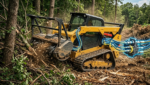
The old-school way of handling this—sending out a bunch of guys with chainsaws, ropes, and standard dirt buckets—is exhausting. It burns daylight, skyrockets your payroll, and wears your crew down before lunch. Let’s be real: storms are getting meaner, and relying on outdated methods is a quick way to lose money and fall behind schedule. Upgrading your heavy equipment isn’t just nice to have anymore; it’s survival. Slapping a hydraulic wood grabber onto your skid steer or compact track loader completely flips the script. Instead of wrestling with Mother Nature’s mess by hand, your operator can roll in, clamp down, and clear the area safely and fast.
- Storm damage creates wildly unpredictable hazards, with heavy logs often trapped under massive tension just waiting to snap back at ground workers.
- Sticking to manual clearing methods with standard buckets wastes time, drags out community recovery, and eats into your profit margins.
- Hooking up a hydraulic wood grabber instantly transforms your skid steer into a purpose-built disaster recovery machine that gets the job done safely.
Clocking Out Early: Unmatched Efficiency and Speed
In the disaster recovery game, time literally equals money. Every hour a neighborhood is blocked off or a commercial property stays buried, the logistical headaches multiply. Here is where a hydraulic wood grabber pays for itself almost immediately. It basically lets a single skid steer operator do the heavy lifting of an entire five-man ground crew, but in a fraction of the time.
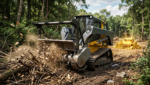
Picture this: instead of your guys cutting a tree into tiny, manageable chunks and tossing them into a trailer by hand, your operator just drives up to the pile. The heavy-duty jaws bite down with massive hydraulic force, gripping huge logs and tangled brush without slipping. You haul it away in one smooth move. Because the clamp secures those awkward, uneven loads so tightly, you aren’t dropping branches halfway to the dump truck. Plus, most of these grabbers have an open, skeletal bottom design.
Why does that matter? Because when you scoop up a pile of brush, all the loose dirt, mud, and gravel sifts right through the bottom. You end up hauling actual debris, not two tons of useless topsoil, which saves you major cash on dump fees and fuel weight.
- A single operator can clear massive debris piles in a single pass, cutting hours or even days off your standard project timeline.
- The raw clamping power grabs hold of awkward, slippery logs so you don’t have to waste time manually chaining them up.
- Skeletal tine designs let dirt and rocks fall right through, meaning you aren’t paying landfill tipping fees for regular yard dirt.
Keeping Your Crew Out of the ER: Superior Safety Standards
You can replace a skid steer attachment, but you can’t replace a crew member. Disaster zones are incredibly dangerous places to work. Fallen timber is heavy, unstable, and full of splintered “widowmakers” that can easily crush or impale someone if a pile shifts unexpectedly. Sending your guys in with chainsaws to untangle a massive web of storm debris is asking for trouble.
It usually leads to smashed fingers, thrown-out backs, or worse. When you equip your fleet with a hydraulic wood grabber, you are physically removing your people from the danger zone. Your operator stays strapped into the reinforced steel cab of the loader, completely shielded from snapping branches and falling timber. The machine’s hydraulics take on 100% of the physical strain.
And because modern grapples give you insane precision, the operator can surgically pull specific logs out of a gnarly pile without causing the whole thing to collapse on top of them. Putting safety first isn’t just about feeling good; it keeps your insurance premiums down and prevents your job site from being shut down due to an accident.
- Operators stay locked inside the safety of the loader cab, miles away from the crushing hazards of shifting timber piles.
- The machine does the heavy lifting, completely erasing the risk of blown-out backs and muscle strains for your ground guys.
- Surgical precision lets you pull out the exact piece of debris you want without destabilizing a massive, dangerous pile of storm waste.
Grabbing More Than Just Timber: Incredible Job Site Versatility
Don’t let the name fool you. Yes, it’s called a hydraulic wood grabber, but this thing is a beast when it comes to almost any kind of solid waste. Tornadoes and hurricanes don’t just knock down trees; they tear off roofs, smash concrete, and scatter metal siding everywhere. You’re rarely dealing with just clean wood. A solid grabber is built to handle that chaotic mix of materials.
Whether you’re staring down a massive pine trunk, a tangle of thorny bushes, twisted aluminum, or chunks of a busted sidewalk, this attachment adapts. The secret sauce is in the independent dual-clamp design found on the good models. This means if you grab a load that’s thick on the left side and thin on the right, the clamps operate independently to bite down tight on both sides.
The load won’t spill out when you hit a bump. Because it can grab basically anything, your operator isn’t hopping out every twenty minutes to swap attachments. You can go straight from clearing a downed oak tree to scooping up the ruined shed it fell on, all without missing a beat.
- It easily handles a crazy mix of materials, from wet timber and thorny brush to torn metal siding and broken cinderblocks.
- Independent dual clamps mold to the shape of weird, asymmetrical loads, locking everything in tight before you drive off.
- You save a ton of downtime because you don’t have to unhook and swap attachments just because the debris type changed.
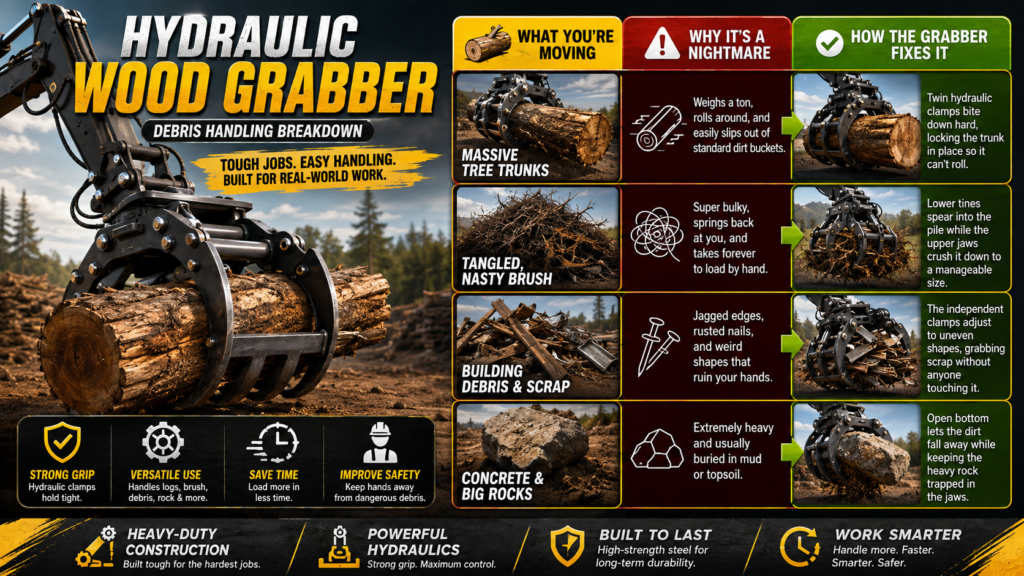
Table: Hydraulic Wood Grabber – Debris Handling Breakdown
| What You’re Moving | Why It’s a Nightmare | How the Grabber Fixes It |
| Massive Tree Trunks | Weighs a ton, rolls around, and easily slips out of standard dirt buckets. | Twin hydraulic clamps bite down hard, locking the trunk in place so it can’t roll. |
| Tangled, Nasty Brush | Super bulky, springs back at you, and takes forever to load by hand. | Lower tines spear into the pile while the upper jaws crush it down to a manageable size. |
| Building Debris & Scrap | Jagged edges, rusted nails, and weird shapes that ruin your hands. | The independent clamps adjust to uneven shapes, grabbing scrap without anyone touching it. |
| Concrete & Big Rocks | Extremely heavy and usually buried in mud or topsoil. | Open bottom lets the dirt fall away while keeping the heavy rock trapped in the jaws. |
What Actually Makes a Good Hydraulic Wood Grabber?
If you’re browsing skidsteer.online right now, you need to know that not all attachments can survive commercial use. Storm cleanup will brutalize cheap equipment. When you’re spending real money, you need to look for a few non-negotiable features. First up is the steel.
It has to be heavy-duty, high-tensile stuff because ripping stubborn roots out of the ground puts an insane twisting force on the frame. If it’s cheap steel, it will bend. Next, look closely at the hydraulic cylinders. In storm work, rogue branches are constantly jabbing at your machine. If the cylinders and hoses are exposed, a sharp branch will puncture a line, blowing hydraulic fluid everywhere and shutting down your day.
You want guarded cylinders and smart hose routing. Take a look at the tine spacing, too. You want them close enough together that you aren’t dropping smaller limbs, but wide enough that mud falls through easily. Lastly, check for grease fittings. Machines get beat to hell in this line of work, and if you can’t easily grease the pivot pins, they are going to wear out fast.
- The frame must be welded from high-tensile steel to survive the violent twisting forces of ripping out roots and stumps.
- Look for shielded hydraulic cylinders and protected hoses so stray branches don’t stab your lines and cause a blowout.
- Make sure there are easy-to-reach grease zerk fittings on all the moving hinges so daily maintenance actually gets done.
Making the Math Work: Maximizing Your ROI
Let’s talk money. Buying a brand-new hydraulic wood grabber is a capital investment, but it’s one that pays you back shockingly fast. The biggest and most obvious return is on payroll. If one guy in a skid steer can do the work of four guys with wheelbarrows and chainsaws, you can take those other three guys and put them on a different money-making job site.
You instantly double your output. But the value doesn’t stop when hurricane season ends. This isn’t a one-trick tool that sits rusting in your yard for nine months. You can use it year-round for land clearing, prepping construction sites, pulling out old landscaping, or doing demolition cleanup. It’s always making you money.
Plus, using the right attachment actually saves your main loader from early death. Trying to lift huge, unbalanced logs by balancing them precariously on the lip of a standard bucket puts nasty side-loads on your loader arms. A purpose-built grabber centers the weight and secures it, which takes a massive amount of stress off your skid steer’s hydraulics and frame.
- Slashes your labor costs by turning a miserable multi-man job into a quick, air-conditioned ride for a single operator.
- Keeps generating cash year-round on landscaping, demolition, and farming jobs long after storm season ends.
- Prevents you from tearing up your expensive skid steer by properly balancing heavy, awkward loads on the loader arms.
FAQs About Hydraulic Wood Grabbers
Why is a hydraulic wood grabber better than a regular bucket for storms?
Because standard dirt buckets can’t hold on to trees. A hydraulic wood grabber physically clamps down on the debris, meaning you can carry massive logs and messy brush over uneven ground without everything spilling out the front.
Can it pick up stuff besides wood?
Absolutely. While they are built for trees, the massive crushing force and thick steel tines are perfect for grabbing twisted roofing tin, shattered cinderblocks, and large rocks scattered around after a tornado.
What’s the secret to keeping this attachment alive?
Grease. It’s really that simple. You have to aggressively grease all the pivot points and cylinder pins to stop metal-on-metal grinding. Keep an eye on your hydraulic hoses for any weird wear spots, and check the frame for cracked welds if you’ve been prying at boulders.
Should I get a tine grapple or a bunching grapple?
For storm cleanup, you want a tine grapple. The long bottom fingers let you scoop under a pile of mixed garbage and sift out the dirt. Bunching grapples are strictly for the logging industry where you are only grabbing large, clean, single logs.
What does the rotator do on some of these grapples?
A fixed mount keeps the grapple rigid, which is great for placing things precisely. A free-hanging rotator lets the grapple swing freely like a pendulum. That’s mostly used by heavy forestry guys who need the log to naturally drag behind the machine on tight trails.
Can it rip out a giant tree stump?
Yes and no. A heavy-duty hydraulic wood grabber can easily pick up a huge stump that’s already loose. But if the stump is still fully rooted deep in the ground, prying at it might bend your grapple. You really want a stump bucket for the actual digging part.
Will it fit my specific brand of skid steer?
Almost certainly. Most grabbers sold today use the universal skid steer quick-attach plate. Just make sure you match the attachment’s weight and required hydraulic flow (GPM) to what your specific machine can handle so you don’t tip over or burn up your pump.