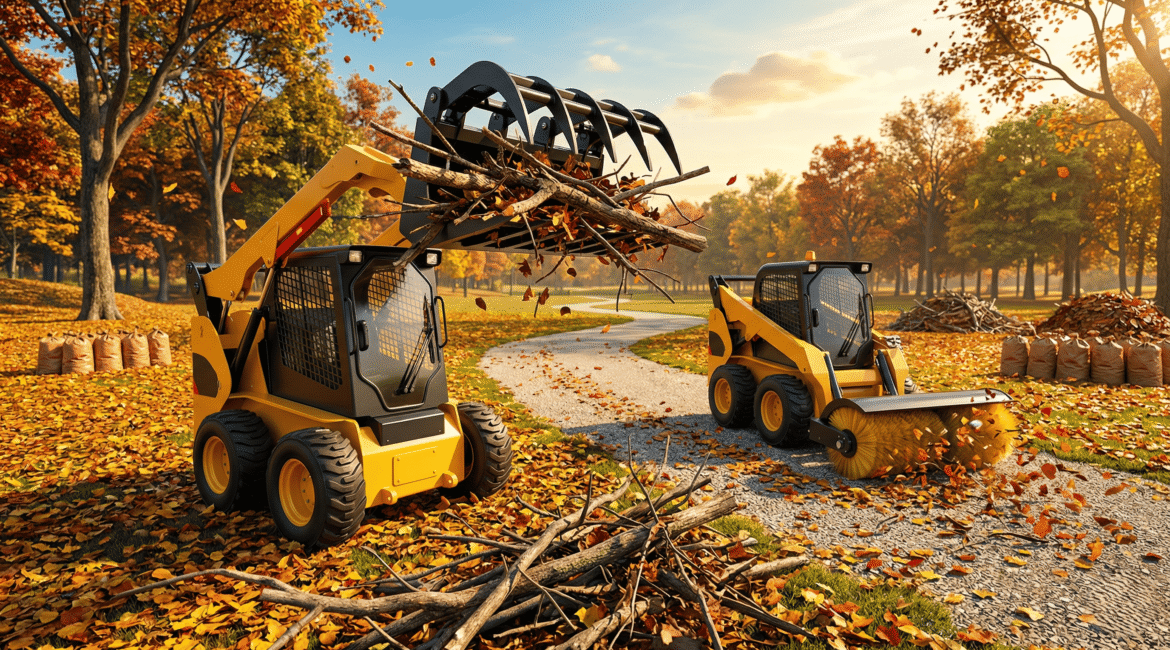
Skid Steer Attachments Fall Cleanup: Tackle autumn chores easily with our top picks for sweepers, grapples, and buckets for leaves and debris!
As the cool autumn air settles in and the bright green of summer turns into a sea of orange, gold, and brown, property owners and landscapers face a familiar problem: a huge amount of leaves and other organic waste. The scenery is beautiful, but the amount of stuff left on the ground can be too much to handle. This is where having the right tools really matters. To really get the most out of your Fall Cleanup, you need more than just manual labor and which is the best option other than best skid steer attachments like sweepers, grapples, and buckets.
Skid Steer Attachments for Fall Cleanup
You need high-performance skid steer attachments that are made to handle the special needs of the season. We know that time is money at skidsteer.online, and it takes the right mix of power and precision to turn a messy yard into a beautiful landscape.
The key to mastering fall maintenance is to choose tools that reduce the number of passes and increase the ease of moving materials. The best way to deal with wet, matted leaves, branches that fell during a late-season storm, or just general yard waste is to use a combination of sweepers, grapples, and specialized buckets.
You can turn your skid steer into a flexible cleaning machine that can handle anything from paved driveways to rough wooded areas by adding these skid steer attachments to your workflow. This guide goes into great detail about how each attachment helps with Fall Cleanup Efficiency, so you’ll be ready for anything nature throws at you this year.
What Power Sweepers Do to Help with Leaf Management
A high-quality power sweeper or angle broom is the fastest way to clear large paved areas, sidewalks, or compacted turf. Leaves tend to stick to things, especially after it rains or frosts in the morning. This makes raking them up a nightmare.
Heavy-duty bristles on a skid steer sweeper spin with high-torque hydraulic motors, making it easy to lift and flick debris away. This is the first thing you need to do to get Fall Cleanup Efficiency on a large scale.
- Directional Control: Most modern sweepers let you angle the hydraulics, which lets you push leaves into neat windrows so they are easier to pick up.
- Protecting the Surface: You can remove heavy debris without hurting the asphalt or delicate turf because the brush tension can be changed.
- Dust Control: Many high-quality sweepers come with built-in water kits that help keep dust down on dry fall days, which keeps visibility and safety high.
Table: Angle Broom Vs. Pickup Sweeper
| Feature | Angle Broom | Pickup Sweeper |
| Best Use | Pushing debris to the side | Collecting and dumping debris |
| Surface | Roads, long driveways | Parking lots, warehouses |
| Efficiency | High speed, continuous motion | High neatness, no secondary cleanup |
Heavy-Duty Grapples for Mastering Debris
You need a way to move a lot of stuff without losing half of it while you’re moving it after you’ve picked up the leaves and found the bigger branches. This is when the grapple attachment becomes the most important tool in your fall toolkit.
A grapple has hydraulic “claws” that hold the load in place, which is different from a regular bucket. A root grapple or a brush grapple is best for fall cleanup because the skeleton-style bottom lets soil and small pebbles fall through while keeping the big trash in place.
- Better Clamping Power: The grapple can hold uneven loads, like a mix of logs and leaf piles, with the same amount of pressure thanks to two hydraulic cylinders.
- Less Ground Disturbance: The tined bottom of a root grapple “combs” through the grass to pick up sticks and thatch without going too deep into your lawn’s roots.
- High Volume Capacity: The big openings let you grab big piles of brush in one go, which cuts down on the number of trips you have to make to the compost site or burn pile.
Versatile Buckets for Getting the Site Ready
Sweepers and grapples do the “heavy lifting,” but specialized buckets add the finishing touch that makes Fall Cleanup Efficiency complete. You shouldn’t just use a regular dirt bucket for fall work; not all buckets are the same.
High-capacity leaf buckets, also called “skeleton” buckets, are made to hold a lot of dried leaves and other organic matter that isn’t too heavy. Using the right bucket keeps your machine from getting weighed down by extra weight and makes sure that every last piece of debris is picked up.
- More Space: Leaf and litter buckets have taller sides and a deeper floor, so you can move much bigger piles of leaves than you can with a regular utility bucket.
- Screening Capabilities: Skeleton buckets are great for separating “clean” organic debris from rocks or trash. This is important if you want to get the material ready for a mulcher or composter.
- Multi-Purpose Edge: A lot of fall-ready buckets come with bolt-on cutting edges that are easy to change, so you’ll always have a sharp “lip” to scrape up wet, stuck-on leaves from the ground.
Which Skid Steer Attachments are More Efficient for Fall Cleanup?
The type of terrain you have and the type of debris you find most often will help you choose the right tool. The sweeper is the best tool for a “clean finish,” but the grapple is the best tool for wood and heavy brush.
Many professionals use a tiered approach to get the most done during their Fall Cleanup: first, they sweep the light stuff into piles; then, they use the grapple to move the bulk; and finally, they use a high-capacity bucket to haul it all away.
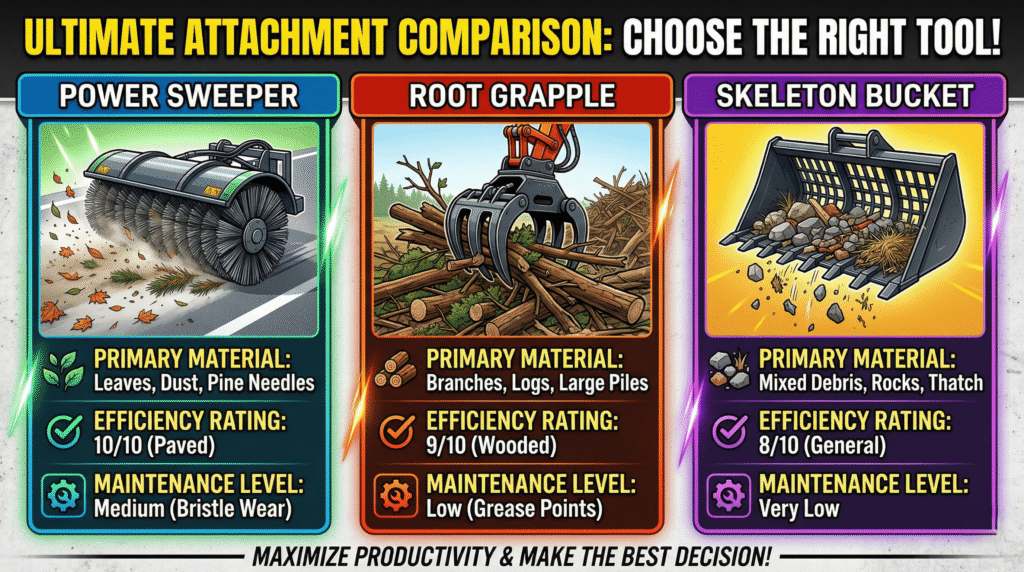
Table: Skid Steer Attachment Types
| Attachment Type | Primary Material | Efficiency Rating | Maintenance Level |
| Power Sweeper | Leaves, Dust, Pine Needles | 10/10 (Paved) | Medium (Bristle Wear) |
| Root Grapple | Branches, Logs, Large Piles | 9/10 (Wooded) | Low (Grease Points) |
| Skeleton Bucket | Mixed Debris, Rocks, Thatch | 8/10 (General) | Very Low |
Maximizing ROI with Multi-Season Attachments
The best thing about buying high-quality attachments for Fall Cleanup Efficiency is that you can use them all year long, even when the snow starts to fall or the spring buds appear.
A power sweeper is great for getting rid of light snow, but a grapple is needed all year round to clear land and fix storm damage. We at skidsteer.online suggest picking attachments that have universal quick-attach systems so that they will work with your current and future fleet.
- Works with all brands: Make sure your attachments use the standard skid steer quick-attach (SSQA) plate so they can work with a wide range of machines.
- Hydraulic Optimization: To keep your skid steer from overheating or running slowly, make sure the GPM (Gallons Per Minute) of the attachment matches the GPM of the skid steer.
- Strong Construction: To make sure your investment lasts through the acidic nature of decaying organic matter, look for powder-coated finishes and high-tensile steel.
Fall Cleanup: Safety and Maintenance Tips
Regular maintenance is necessary to keep Fall Cleanup Efficiency at its highest level. Fall debris is often wet and acidic, which can cause equipment to rust faster if it is not properly cared for. Also, hidden things like stumps or rocks under leaf piles can be dangerous for both the operator and the attachment.
- Daily Cleaning: After a long day of moving wet leaves, always pressure wash your attachments to keep rust and buildup out of the hydraulic couplers.
- Check the hydraulic hoses: Cold mornings in the fall can make hoses brittle, so check for cracks or leaks before you start your shift to avoid having to stop work for a long time.
- Clean up the work area: Before using a high-speed sweeper, walk around the area and pick up any big rocks or metal scraps that could hurt the bristles or hit people nearby.
FAQs – Fall Cleanup Skid Steer Attachments
What is the best attachment for a skid steer to use to pick up big piles of leaves?
A high-capacity leaf bucket or a grapple bucket is best for big, loose piles. The grapple works best when the leaves are mixed with sticks or branches because the hydraulic arms keep the load safe while it is being moved.
Is it okay to use a skid steer sweeper on wet leaves?
Yes, but it needs more power. Leaves that are wet are heavier and tend to “clump.” You can pick them up with a sweeper with high-quality poly or wire bristles, but you should move more slowly to make sure the job is done right.
Is a root grapple better for cleaning up after a fall than a solid bottom grapple?
Yes, in general. A root grapple lets dirt and small organic matter fall back to the ground, which is better for your lawn’s health and makes the debris you’re hauling less heavy.
How can I make my fall cleanup go faster on uneven ground?
An articulating brush cutter or a grapple with separate cylinders lets the attachment fit the ground, picking up trash in dips and hollows that a regular bucket might miss.
Do I need high-flow hydraulics for a sweeper that goes on a skid steer?
Most standard sweepers work well with standard-flow hydraulics (15–25 GPM). But for heavy-duty industrial sweepers used on big city projects, high-flow may be needed to get the most torque.
How do I keep my skid steer from ruining the lawn while I’m taking the leaves off?
Use attachments that can “float” to protect the turf, and think about using turf tires or rubber tracks. Don’t make sharp turns, and make sure your grapple tines aren’t too deep in the ground.
Is it possible to use a 4-in-1 bucket to clean up after the fall?
Yes, of course. The 4-in-1 bucket is like a “Swiss Army Knife” because it can scoop up leaves, grab branches like a grapple, and even act as a light-duty dozer blade to push trash into piles.