The Ultimate Guide to the Skid Steer Brush Hog: Mastering Land Management
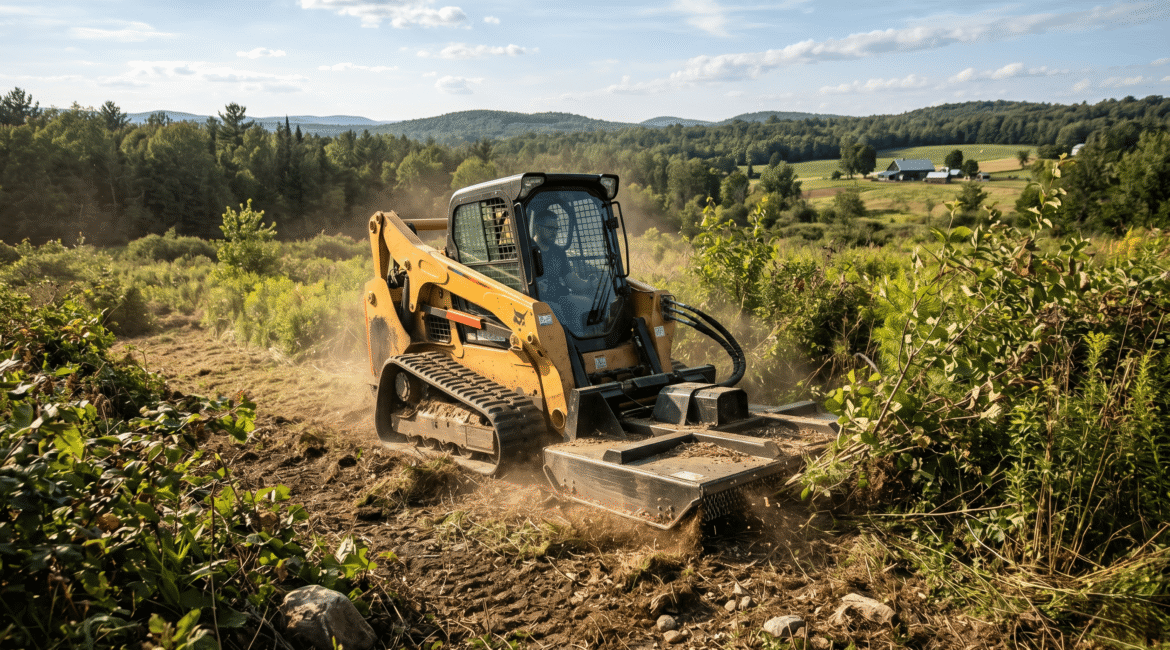
The ability to use small machines for many different tasks has changed the way property maintenance is done today. The skid steer brush hog, which is also known as a rotary cutter in professional circles, is the best tool for controlling plants for both contractors and landowners.
This strong attachment will turn a regular skid steer loader into a high-performance clearing machine that can handle overgrown pastures, thick thickets, and tough brush that a regular lawn mower wouldn’t even think about touching. The brush hog uses heavy-duty blades to mulch organic matter, which returns nutrients to the soil and instantly makes your land look and work better. It does this by using the hydraulic power of your loader.
It’s important to know how your equipment works and what it can do, whether you’re in charge of a big commercial estate or getting a residential lot ready for construction. A high-torque skid steer and a precision-engineered brush hog work together to make clearing speeds that were once impossible for small crews.
Choosing the right rotary cutter is a smart way to save time and money as you deal with the difficulties of managing land. This guide goes into great detail about these attachments so that you can get the most out of your investment while keeping the job site as safe as possible.
The Engineering That Makes the Skid Steer Brush Hog So Great
The skid steer brush hog is a work of art in hydraulic engineering. Its main job is to turn fluid power into raw cutting force. Most high-end models have a direct-drive or gear-box system that keeps the blades spinning at a steady speed even when they hit thick patches of plants.
The deck is usually made of high-quality reinforced steel that can handle the impact of rocks and hidden debris. This protects both the operator and the machine’s internal parts.
- High-strength steel decks keep the “deck bowing” from happening when heavy-duty clearing work is going on.
- Forged blades that have been heat-treated last longer and can be sharpened many times.
- Built-in pressure relief valves keep the motor from stalling or having hydraulic spikes all of a sudden.
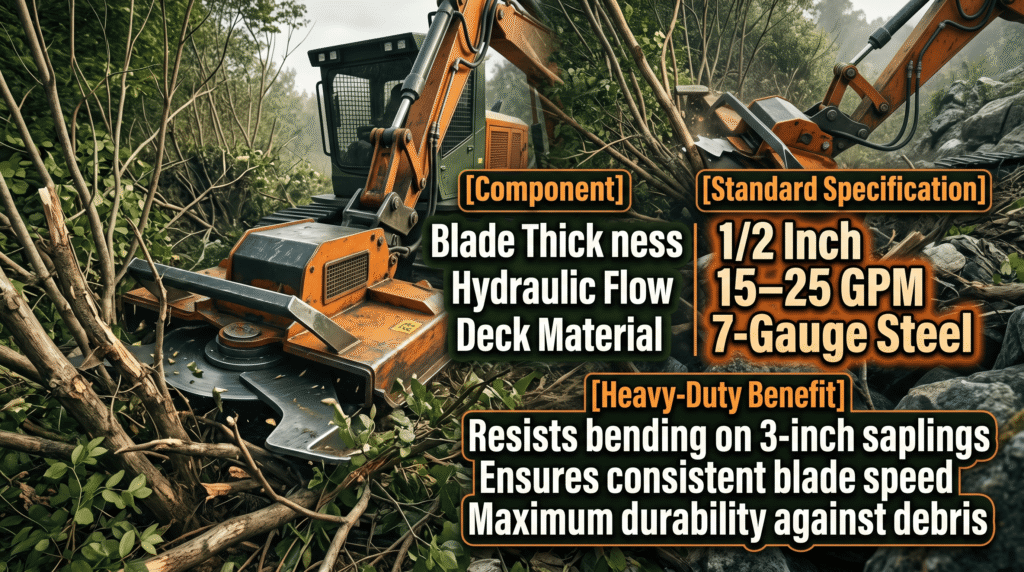
Table: Skid Steer Brush Hog
| Component | Standard Specification | Heavy-Duty Benefit |
| Blade Thickness | 1/2 Inch | Resists bending on 3-inch saplings |
| Hydraulic Flow | 15–25 GPM | Ensures consistent blade speed |
| Deck Material | 7-Gauge Steel | Maximum durability against debris |
Important Uses for Professional Land Clearing
A skid steer brush hog can do a lot more than just cut grass, which is why it is so popular in many fields. In farming, it is used to clear overgrown grazing land, and in construction, it is the main tool for preparing a site for building.
The universal quick-attach system lets you switch from a regular bucket to a brush hog in just a few minutes, making the skid steer the most versatile tool in your fleet.
- Getting back overgrown pastures so that there is more land available for livestock.
- Keeping utility right-of-ways and pipeline corridors clear for safe access.
- Making firebreaks in wooded areas that work to keep homes safe.
How to Pick the Best Brush Hog for Your Machine
Not all attachments are the same, and it’s very important to match a skid steer brush hog to the hydraulic output of your loader for it to work well. Putting too much weight on a low-flow machine with a high-flow cutter can cause it to overheat and possibly break down.
On the other hand, using a low-flow cutter on a high-flow machine without the right controls can hurt the motor of the attachment. Before you buy, always check the Gallons Per Minute (GPM) and PSI ratings in your machine’s manual.
- To clear an area in one pass, make sure the cutting width matches the tire or track width of your skid steer.
- Based on the terrain you usually work on, check the “cutting capacity” rating (for example, 2-inch vs. 4-inch diameter).
- Think about how much the attachment weighs to make sure your loader stays balanced on slopes.
| Feature | Residential Use | Commercial/Industrial |
| Cutting Width | 60 – 66 Inches | 72 – 84 Inches |
| Motor Type | Direct Drive | Piston Motor (High Torque) |
| Blade Count | 2 Blades | 3 – 4 Blade Systems |
Maintenance Protocols for Peak Performance
A strict maintenance schedule is a must if you want your skid steer brush hog to last for many years. Daily checks are the best way to avoid expensive repairs on these machines because they work in rough, debris-filled areas.
You can stop vibration problems that can shake the whole loader by checking for wire or twine wrapped around the drive shaft and making sure the blades don’t have any big chips or cracks.
- Every 8 to 10 hours of use, grease all of the pivot points and bearing housings.
- Look for cuts or “pinhole” leaks on hydraulic hoses that could let fluid out.
- Check that all of the mounting bolts and “stump jumpers” on the blade are tightened to the right amount.
Things to think about for cutting at high speeds
When you use a skid steer brush hog, you have to control a fast-moving mass, which is always dangerous if you don’t follow safety rules. The debris that comes out can move very quickly, so it’s important to have safety chains or rubber deflectors on the deck.
Also, operators should always make sure that their skid steer has a shatterproof polycarbonate door (Demo Door) instead of regular glass when they are cutting brush to protect against kickback.
- Always keep people and pets at least 300 feet away from the work area.
- Don’t raise the deck more than a few inches off the ground while the blades are running.
- Before you leave the cab to do inspections, make sure the “whirring” sound has stopped completely.
Getting the Most Out of Thick Vegetation
When using your skid steer brush hog to clear thick brush, the way you do it is just as important as the equipment itself. Instead of rushing through a thick patch, experienced operators use a “nibbling” or “pulsing” technique.
This keeps the RPMs high while the blades mulch the material. Land clearing experts often use the strategy of tilting the front of the deck up a little to knock over taller saplings and then backing over them to mulch the trunk.
- To get a “finished” look like a rough-cut lawn, keep the deck level.
- Keep a steady ground speed so that the hydraulic system can recover between loads.
- For safety, use the loader’s tilt function to lower stumps to the ground.
FAQs – Skid Steer Brush Hog
How do a brush hog and a forestry mulcher differ?
A skid steer brush hog is made to cut grass, weeds, and light brush that is 3 to 4 inches in diameter. It usually has blades that spin horizontally. A forestry mulcher is a much heavier-duty attachment with a drum-style cutter that can turn whole trees into wood chips. This makes it better for clearing thick forests.
Is it possible for a standard-flow skid steer to run a brush hog?
Yes, most companies make “Standard Flow” models that are made just for machines that make 15 to 25 gallons per minute. But you need to make sure that the motor on the attachment matches the hydraulic output of your machine to avoid damage.
How thick of a tree can a skid steer brush hog cut through?
Most standard models can handle materials up to 2 inches thick, while heavy-duty or “extreme” models can handle saplings and brush up to 4 or 5 inches thick. Going over these limits can break the blades or hurt the drive motor.
Why is my brush hog shaking so much?
Unbalanced blades are what usually cause vibration. When one blade is chipped, bent, or worn out more than the other, this happens. Debris like wire or rope wrapped around the blade carrier can also cause this.
Does my skid steer need a special door to use a brush hog?
Yes, it is highly recommended to use a “Demolition Door” made of 1/2″ thick polycarbonate. If the brush hog throws a rock or piece of wood back toward the cab, standard glass can easily break.
How often do I need to sharpen the blades on my brush hog?
For best results, blades should be checked every day and sharpened every 20 to 40 hours of use, depending on the type of soil and how much rock they come into contact with. Sharp blades make your hydraulic system work less hard.
Is it okay to use a brush hog to finish mowing my lawn?
A brush hog can cut grass, but it isn’t meant to give it a “manicured” look. It is a rough-cut tool that leaves behind clippings and a rougher finish than a zero-turn or a dedicated finish mower.