
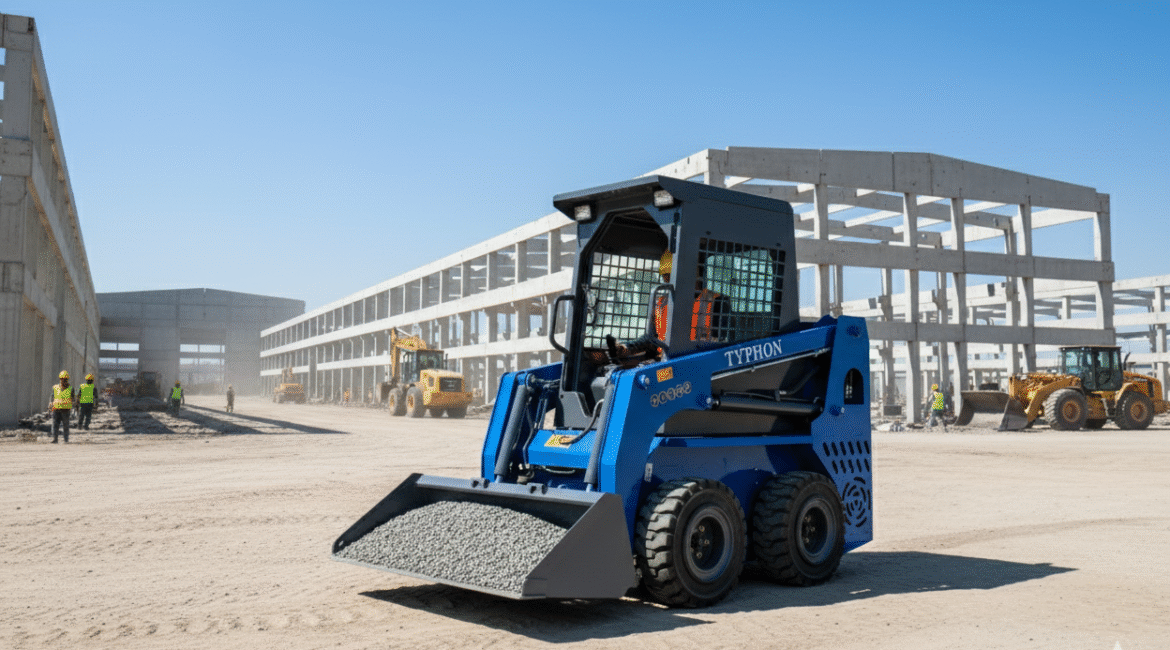
The Hidden Profit Killer: A Deep Dive into Skid Steer Loader Efficiency
If you walk onto any job site at 7:00 AM—whether it’s a residential landscape in the suburbs or a chaotic commercial demolition downtown—you will likely hear the familiar roar of a skid steer loader. It is the heartbeat of the modern construction site. But listen closer.
There is a difference between the sound of a machine that is making money and a machine that is burning it.
We often talk about “efficiency” in terms of manufacturing specs—horsepower, hydraulic flow rates, and tipping loads. Brochures love those numbers. But for the owner-operator or the fleet manager, efficiency isn’t found on a spec sheet. Efficiency is found in the gap between “getting the job done” and “getting the job done without draining the fuel tank, shredding the tires, or burning out the operator.”
Real efficiency is about flow. It is about the hundreds of tiny decisions made every hour that either speed up the cycle or slow it down. This guide is going to strip away the corporate buzzwords and look at the gritty, real-world mechanics of how to run a skid steer loader at peak performance.
The Operator Factor: The “Smooth Hands” Philosophy
The single biggest variable in the efficiency equation sits in the seat. You can put a rookie in a brand-new, $60,000 high-flow machine, and an old-timer in a beat-up, 15-year-old loader, and the old-timer will likely finish the grade faster and with half the fuel.
Why? Because the rookie confuses “speed” with “movement.”
New operators often treat the joystick like an on-off switch. They jam the sticks forward, the machine lurches, the bucket slams into the pile, the tires spin, and they stall the engine. Every time the tires spin, you are losing money. It’s a simple equation: traction is production; spinning is waste.
True efficiency comes from what veterans call “smooth hands.” It’s the ability to blend functions—lifting the boom while curling the bucket and driving forward simultaneously—in a fluid motion that keeps the momentum of the machine alive. When you stop a skid steer to change direction, you are fighting physics. The machine is heavy. Getting it moving takes energy. Keeping it moving takes finesse.
The “Bobblehead” Test Watch your operator. If their head is bobbing around in the cab like a doll on a dashboard, they aren’t being efficient; they are fighting the machine. A smooth operator looks almost bored. They approach the pile, scoop without stopping, reverse in a tight arc (not a zero-turn spin that tears up the ground), and dump the load while already turning back toward the pile. It’s a dance, not a wrestling match.
The Full Throttle Myth
There is a pervasive myth in the industry that the throttle should always be pinned to the firewall. “Run it wide open,” they say. This is efficiency suicide.
While it is true that skid steers need high RPMs to generate hydraulic flow, running at 100% throttle for tasks that only require 60% power is just turning diesel into noise. Modern diesel engines have torque curves that peak well before the redline. If you are just carrying a pallet of sod across a flat lawn, running at full scream doesn’t make you move faster (ground speed is often limited by the pumps, not the engine speed); it just burns fuel and heats up the hydraulic fluid.
The Sweet Spot Strategy:
-
Heavy Digging: 90-100% Throttle. (Maximum breakout force required).
-
Load & Carry: 75-80% Throttle. (Sufficient speed, less fuel burn).
-
Fine Grading: 50-60% Throttle. (Precision over power).
The smart operator knows the “sweet spot” of their specific machine where the hydraulics feel snappy but the engine isn’t screaming. Finding this balance can shave 10-15% off your daily fuel bill. Over a year, that’s a free set of tires.
The Tire Pressure Variable
Speaking of tires, let’s talk about the black round things that connect your wallet to the dirt. In the rush of the morning startup, tire pressure is almost always ignored. As long as they aren’t flat, we roll. But tire pressure is the secret sauce of efficiency.
A skid steer is a rigid-frame machine. It has no suspension. The tires are the suspension. If your tires are over-inflated, the machine will bounce violently over every rock and rut. This “dribbling basketball” effect forces the operator to slow down to keep the load in the bucket. You lose material over the front edge (spillage), and you lose time because you can’t drive at speed.
On the flip side, under-inflated tires create a different problem. They drag. The rolling resistance increases, making the engine work harder to push the machine forward. It feels like driving through molasses. Plus, a soft tire on a heavy lift can cause the machine to feel “squishy” and unstable, killing the operator’s confidence.
The goal is to check the manufacturer’s spec and adjust for the job. If you are on soft sand, dropping a few PSI can give you floatation and traction. If you are on hard concrete, airing up reduces drag and wear. It takes five minutes to check, but it saves hours of struggle.
Efficiency Killers: A Quick Checklist
Before we dive deeper into cycle times, take a look at your current operation. Are you guilty of these common efficiency sins?
-
The “Zero-Turn” Pivot: Spinning 180 degrees in place tears up tires and burns fuel. Fix: Use a 3-point “Y” turn.
-
The Long Haul: Driving more than 300 feet to dump a bucket. Fix: Move the dump truck closer or use a site dumper.
-
The Dirty Bucket: Mud caked inside the bucket reduces capacity by 10-20%. Fix: Clean it out daily.
-
The Idling Addict: Leaving the machine running during lunch or long conversations. Fix: Turn the key.
The Art of the Cycle Time
Efficiency in earthmoving is measured in cycles. Dig, carry, dump, return. That is one cycle. If you can shave three seconds off a 30-second cycle, you have just improved your productivity by 10%.
The biggest killer of cycle time is travel distance. We often see job sites set up by habit rather than logic. The dump truck is parked at the street. The dirt pile is in the backyard. The skid steer spends 70% of its time driving back and forth. This is “transporting,” not “working.” Skid steers are terrible transport vehicles. They are designed for short, aggressive movements.
Efficiency demands that you shrink the site. Bring the dump truck closer. Move the material pile to the center of the work zone. If you have to move material more than 200 feet, you shouldn’t be using a skid steer; you should be using a wheel loader or a site dumper. Using a skid steer for long-haul transport is like using a sledgehammer to drive a tack—it works, but it’s exhausting and wasteful.
Another cycle-time killer is the “turn radius.” Skid steers can counter-rotate (spin in place), which is their claim to fame. But counter-rotating is the most inefficient move you can make. It stops all forward momentum, chews up the tires, and burns massive amounts of fuel to skid the rubber against the ground. The efficient turn is a “Y” turn or a gradual arc. By keeping the wheels rolling, even slightly, you reduce the friction and stress on the drive motors. The goal is to never come to a complete stop until you are dumping the bucket.
Hydraulic Health: The Invisible Hand
You can’t see hydraulic efficiency, but you can feel it. The hydraulic system is the muscle of the machine. When it’s healthy, the bucket snaps up. When it’s struggling, the machine feels lethargic. The enemy here is heat and contamination.
As hydraulic fluid gets hot, it gets thin. Thin fluid slips past the seals in the pump and motor, leading to a loss of power. This is called “volumetric efficiency loss.” If your cooling package (the radiator and oil cooler) is clogged with dust, mulch, or dandelion fluff, your fluid runs hot, and your machine gets weak. You find yourself revving the engine harder to do the same work, burning more fuel for less result.
A daily ritual of blowing out the radiator with compressed air or a leaf blower is not just “cleaning”; it is restoring the machine’s horsepower. Furthermore, attachment couplers are notorious efficiency leaks. If you have a dirty flat-face coupler, and you force it onto the machine, you introduce grit into the system. That grit acts like sandpaper on the inside of your pumps. Over time, your “high flow” machine becomes a “medium flow” machine, and you won’t even notice the drop until you realize you can’t lift a pallet of pavers that you used to lift easily.
The Attachment Trap: Matching Tool to Task
One of the greatest strengths of the skid steer is its versatility. It is the Swiss Army Knife of heavy equipment. But this strength can also be a trap. Just because you can do a job with a bucket doesn’t mean you should.
Let’s say you need to dig a trench for an electrical line. You could use the bucket and dig a wide, messy V-shaped ditch. You will move 10 yards of dirt to lay a 4-inch pipe. Or, you could rent a trencher attachment. The trencher moves exactly the amount of dirt needed.
The “efficiency trap” is thinking, “I don’t want to spend $200 renting the trencher, I’ll just use the bucket.” But if using the bucket takes you four hours, and the trencher takes you 30 minutes, you have lost money. You burned three and a half hours of diesel, put hours on the machine, and wasted labor time that could have been billed elsewhere.
Top Efficiency Attachments:
-
Grapple Bucket: Saves hours of manual labor when clearing brush or demolition debris.
-
Pallet Forks: Far safer and faster for moving materials than trying to balance them in a bucket.
-
Snow Pusher: Moves 3x the volume of snow compared to a standard bucket.
-
Grading Bar (Land Plane): Turns a novice operator into a grading pro, eliminating the need for rework.
Site Management and Communication
Efficiency doesn’t happen in a vacuum. It happens in a chaotic environment involving other people. A skid steer operator waiting on a dump truck is burning money. A dump truck waiting on a skid steer is burning money.
The rhythm of the job site dictates the efficiency of the machine. This is where communication comes in. Hand signals, eye contact, or radio headsets are vital. If the operator knows exactly where the next load goes before they scoop it, they don’t have to pause at the top of the ramp to look around.
Consider the layout of the “spoil pile.” An efficient operator manages their pile. They don’t let it get spread out and messy. They keep it tight and high. A tight pile is easier to scoop from. You can get a full bucket in one pass. If the pile is scattered, you have to chase the dirt, taking two or three “bites” to fill the bucket. Those extra bites are wasted time.
Fuel Management Strategy
We can’t talk about efficiency without talking about the price of red diesel. It is the recurring cost that eats margins alive. Idle time is the silent thief. Modern telematics data shows that many skid steers spend 30% to 40% of their day idling. That is the operator pausing to check their phone, talking to the foreman, or waiting for a delivery.
If the machine isn’t moving, shut it off. It sounds simple, but it requires a culture shift. Many old-school operators believe it’s better to let a diesel run than to restart it. With modern common-rail engines and improved starters, this is no longer true. If you are going to be stopped for more than three minutes, turn the key. Also, use the “Auto-Idle” feature if your machine has it. This drops the RPMs to a whisper when the joysticks aren’t touched for a few seconds. It saves fuel and, perhaps more importantly, it quiets the job site, allowing for better communication and less operator fatigue.
The Cost of Cleanliness
Finally, we have to address the condition of the undercarriage. A mud-packed track frame is an anchor. If you are working in heavy clay or wet loam, your tracks can accumulate hundreds of pounds of mud. This dries into a concrete-like substance overnight. When you start the machine the next morning, the drive motors have to fight that friction to turn the tracks. It increases the load on the engine and accelerates wear on the sprockets and rollers.
Cleaning the undercarriage at the end of the shift isn’t just about looking good. It is about removing the parasitic drag that steals your power. A clean machine rolls easier. It cools better. It leaks less (because you can actually see the leaks and fix them early).
Efficiency is a Mindset
Ultimately, skid steer efficiency is not a single trick. You can’t just buy a “more efficient” machine and expect miracles. Efficiency is the sum of a thousand small disciplines.
It is the discipline of checking tire pressure when you are running late. It is the discipline of cleaning the radiator when you are tired. It is the discipline of backing off the throttle when you don’t need the power, and planning your turn so you don’t tear up the turf. When you combine a well-maintained machine with a smooth, thoughtful operator and a logically planned job site, you stop just moving dirt and start building profit. The machine stops fighting you and starts working for you. And that is the only definition of efficiency that matters.