How a Mini Skid Steer Can Replace Multiple Tools for Small Property Owners: Cost Savings and Versatility Benefits
For people who own small amounts of land, managing it, landscaping it, or doing light construction can feel like a never-ending list of chores. In the past, this meant having a fleet of expensive, one-use machines: a truck for hauling, a tractor for mowing, and a dedicated trencher for irrigation.
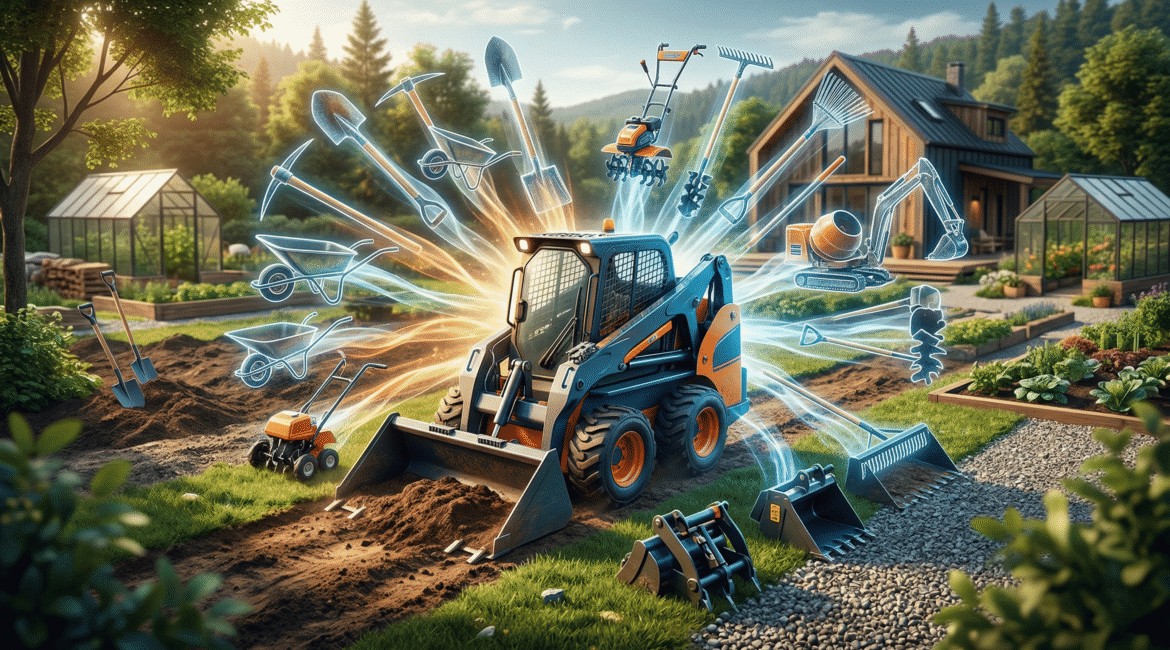
The mini skid steer, on the other hand, has changed the way property management works. This small but powerful machine is more than just a “smaller loader.” It’s a multi-functional ecosystem that lets you combine all of your tools into one machine. Homeowners can get professional-level productivity without the professional-level price tag if they understand how hydraulic versatility and lift capacity work together.
The Multi-Tool Revolution: Why One Tool is Better Than Five
The best thing about a mini skid steer is that it can change to fit your needs. A mini skid steer is not like a regular tractor, which is mostly made to pull things. Instead, it is a mobile hydraulic power unit.
You can change from a bucket to a stump grinder in less than 30 seconds with a universal quick-attach system. Because it can be used with different engines, tires, and frames, you won’t have to keep up with all of them, which will save you a lot of money in the long run.
- Consolidated Maintenance: You only have to keep an eye on one set of filters, oil, and hydraulic fluid instead of five different engines.
- Smaller Storage Footprint: A single mini skid steer and a rack of attachments take up a lot less space in a barn or garage than a bunch of machines that are only used for one thing.
- Unmatched Maneuverability: These machines can fit through regular 36-inch backyard gates, which lets them work in “zero-clearance” areas where regular tools would not work.
Cost-Benefit Analysis: Why Going Mini Makes Financial Sense
For a serious property owner, buying a mini skid steer is a smart financial move. At first glance, the price of the whole set might seem higher than just one lawn tractor. However, when you add in the money you’ll save on labor, the “cost per task” goes down a lot.
One person driving a mini skid steer can usually move as much dirt as six to eight people working by hand. In a market where rental and labor costs are going up, the machine often pays for itself in the first year of ownership by saving money.
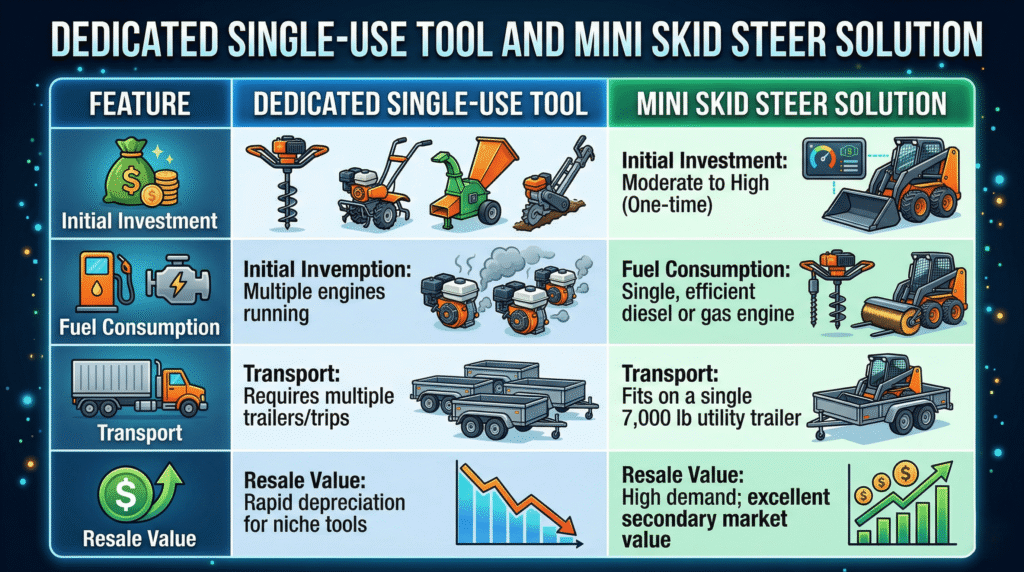
Dedicated Single-Use Tool and Mini Skid Steer Solution
| Feature | Dedicated Single-Use Tool | Mini Skid Steer Solution |
| Initial Investment | Low (per tool) / High (total fleet) | Moderate to High (One-time) |
| Fuel Consumption | Multiple engines running | Single, efficient diesel or gas engine |
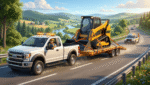
| Transport | Requires multiple trailers/trips | Fits on a single 7,000 lb utility trailer |
| Resale Value | Rapid depreciation for niche tools | High demand; excellent secondary market value |
- Fuel Efficiency: Smaller engines use a lot less fuel than full-sized loaders, but they still have enough power for tasks around the house.
- Less Insurance and Licensing: You don’t need a Commercial Driver’s License (CDL) to drive most mini skid steers, which saves you time and money.
- Labor Displacement: Things like digging post holes or moving three tons of gravel, which would take a weekend to do by hand, can be done in less than an hour.
Understanding Lift Capacity: How to Match Power to the Job
A lot of people who buy a car for the first time only think about horsepower. Rated Operating Capacity (ROC) is the most important number when it comes to mini skid steers. ROC is usually thought of as 50% of the machine’s “tipping load,” which is when the back wheels or tracks come off the ground. By matching your machine to the heaviest load you expect, you can avoid putting too much strain on the hydraulic system or making the terrain unsafe.
- Radial vs. Vertical Lift: Radial lift machines move in an arc, which makes them better for digging and grading. Vertical lift machines raise loads straight up, which makes them perfect for loading trucks with high sides.
- Hydraulic Flow (GPM): Make sure that the Gallons Per Minute (GPM) of your machine matches the GPM of your attachments. Brush cutters and other high-flow attachments need more “juice” than regular buckets.
- Benefits of Counterweights: Many modern mini skid steers come with bolt-on counterweights that can safely raise your lift capacity for certain heavy-duty jobs.
An Explanation of Key Operating Specifications
It can be hard to figure out how to read a spec sheet. You need to look past the shiny brochure and know how the machine’s weight and balance will affect its performance in order to find the right fit for your property. If your turf is too heavy, it could break, and if it’s too light, it won’t be able to handle heavy wet soil or big rocks.
- Ground Pressure (PSI): Tracked mini skid steers spread weight over a larger area and often put less pressure on the ground than a human footprint, which keeps your lawn from getting rutted.
- Dump Height: Always check the highest hinge-pin height to make sure the machine can get over the side of your pickup truck bed or dump trailer.
- Safety when tipping: Never go over the tipping load limit; always stay within the ROC to keep steering control and stability.
Necessary Attachments for Every Small Property
The front-end versatility of the mini skid steer is what makes it “magic.” The right attachments can make a weekend of hard work on a small property into a hobby on Tuesday mornings. Here are the basic things that should be in your “starter kit,” depending on what kind of land you have (wooded, flat, or agricultural):
- 4-in-1 Bucket: This “Swiss Army Knife” attachment can scoop, blade, grip, and dump material from the bottom, replacing a regular bucket and a grapple.
- Auger Drive: Great for putting up fences, planting trees, or putting in deck footings with perfect accuracy.
- Pallet Forks: Necessary for moving big loads of mulch, sod, or equipment around the property without having to unload them by hand.
Tips for keeping things running smoothly for a long time
Because a mini skid steer can do the work of so many tools, it needs to be up and running all the time. When something breaks down, all of your “tools” stop working at the same time. These machines are lucky because they only need “10 minutes of maintenance.” Most daily checks are behind a single rear hood, which makes it easy to keep track of the machine’s health.
- Greasing every day: To keep the pins and bushings from wearing out too quickly, grease the pivot points every 8 to 10 hours of use.
- Hydraulic Inspection: Look for “weeping” or cuts on the hoses, especially after working in thick brush or rocky soil.
- Track/Tire Tension: Keeping the right amount of tension on your tracks stops “de-tracking,” which can be a hard and time-consuming fix in the field.
FAQs – Mini Skid Steer
What is the safe weight limit for a mini skid steer?
The Rated Operating Capacity (ROC) of most mini skid steers is between 500 and 1,500 pounds. They can lift more weight (up to their tipping load), but staying within the ROC keeps the machine stable and the hydraulics from overheating.
Do I need a license to drive a mini skid steer on my own land?
You don’t need a special license to use it on your own land. OSHA does require that operators be “trained and competent” if you are using it for business, though.” If you’re towing the machine, make sure the total weight of your trailer doesn’t go over the local non-CDL limits.
Is a mini skid steer with tracks or wheels better for homeowners?
For home use, tracked models are usually better because they put less pressure on the ground (which means less lawn damage) and are more stable on slopes. Wheeled models are faster and easier to keep up, but they can get stuck in mud very easily.
Is it possible for a mini skid steer to fit through a normal backyard gate?
Yes, a lot of “narrow-chassis” models are made to be 34 to 36 inches wide, which lets them go through regular pedestrian gates without having to take down fence panels.
What is the difference between a compact track loader (CTL) and a mini skid steer?
People often use the words “mini” and “small” interchangeably. However, technically, a skid steer has wheels and a CTL has dedicated tracks. Both have the same universal attachment plates.
How much does it cost to rent or buy a mini skid steer?
Depending on the brand and specs, new units usually cost between $25,000 and $60,000. Renting usually costs between $250 and $450 a day. For people who own property and do a lot of work on it, the break-even point is usually within 2 to 3 years.
Is it possible to use attachments from different brands on my mini skid steer?
Yes, most new mini skid steers come with a “Universal Mini Quick-Attach” plate. This means that you can use a Bobcat attachment on a Toro machine or a Ditch Witch attachment on a Vermeer machine, as long as the hydraulic GPM is the same.